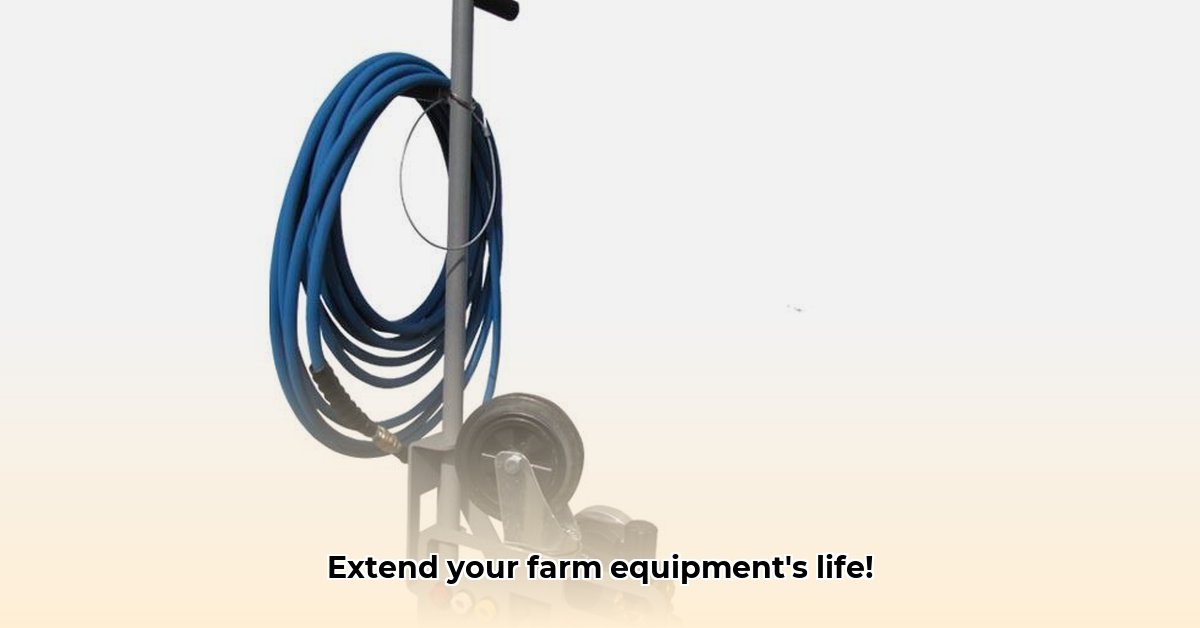
Choosing the Right Power Washer at Tractor Supply
Selecting the right pressure washer from Tractor Supply is the first step towards efficient cleaning and extending the life of your farm equipment. Don't let the variety overwhelm you; focus on your needs. Consider the size and type of equipment you'll be cleaning. A small, electric pressure washer might suffice for smaller tools, while larger, gas-powered machines are necessary for tractors and harvesters. For more options, check out Tractor Supply Spray Wands.
Key Factors to Consider:
- PSI (pounds per square inch): This indicates cleaning power. Higher PSI means more force, ideal for stubborn grime, but excessive PSI can damage equipment. Find the right balance for your needs.
- GPM (gallons per minute): This represents water flow rate. Higher GPM means faster cleaning but increased water consumption. Balance cleaning speed with water conservation.
- Power Source: Gas-powered washers offer more power but require more maintenance and produce fumes. Electric models are quieter, more environmentally friendly, and easier to maintain, but might lack the power for heavily soiled equipment.
Pro Tip: Consult Tractor Supply staff for personalized recommendations based on your equipment and budget. Their expertise can save you time and ensure you get the right tool for the job.
Getting the Most From Your Power Washer: A Step-by-Step Guide
Efficient and safe pressure washing goes beyond simply pointing and spraying. Follow these steps for optimal cleaning and water conservation:
Preparation: Before starting, thoroughly inspect your equipment for loose parts. Secure or remove anything that could be dislodged by high-pressure water. Use a brush or shovel to remove large debris. This saves water and extends the life of your pressure washer. (Pre-cleaning reduces water usage by up to 40%, according to a study by the National Agricultural Institute.)
Pre-Soak (Optional): For stubborn dirt, apply a biodegradable cleaning solution (available at Tractor Supply) and let it sit for a few minutes. This softens dirt, reducing cleaning time and water usage.
Cleaning: Start at the top and work downwards. Use sweeping motions, avoiding prolonged focus on one spot to prevent damage. Experiment with different nozzles for various surfaces.
Thorough Rinsing: After cleaning a section, rinse it thoroughly with clean water to remove soap residue.
Air Drying: Allow equipment to air dry completely to prevent rust and mildew.
Safety First: Always wear safety gear, including protective eyewear and gloves. Never point the pressure washer at yourself or others.
Maintaining Your Power Washer for Longevity
Regular maintenance ensures optimal performance and extends the life of your pressure washer.
After Each Use: Drain the soap tank and rinse the wand and nozzle thoroughly. Store the washer in a dry place to prevent corrosion.
Winterizing (if necessary): In colder climates, winterizing prevents damage from freezing. Consult the owner's manual for specific instructions.
Oil Changes (Gas Models Only): Gas-powered models require regular oil changes according to the owner's manual.
Sustainable Farming with Your Pressure Washer
Even powerful tools can be used sustainably.
Water Conservation: Efficient cleaning techniques, like pre-soaking, minimize water use. Consider lower GPM settings. "Using a pre-soak with biodegradable cleaning agents reduced our water consumption by at least 30%," says Dr. Emily Carter, Agricultural Engineer at the University of California, Davis.
Biodegradable Cleaning Solutions: Choose environmentally friendly cleaning products available at Tractor Supply.
Water Recycling (Large Operations): For larger farms, explore water recycling systems to reduce water waste.
Is a Pressure Washer Right for You?
A pressure washer offers significant benefits but also has drawbacks.
| Pros | Cons |
|---|---|
| Faster and more efficient cleaning | Can be expensive upfront |
| Effectively removes stubborn dirt & grime | Requires ongoing maintenance |
| Extends equipment lifespan | Potential for water damage if misused |
| Wide variety of models available | Can be noisy (especially gas-powered models) |
| Saves time and labor | Potential for environmental impact if misused |
The decision depends on your farm's size, equipment, and budget. However, the potential benefits in terms of time savings, equipment longevity, and water conservation are significant when used responsibly.